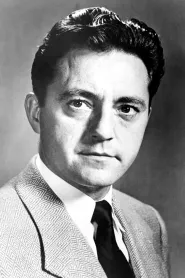
Sidney Lumet was a visionary director whose work has left an indelible mark on the world of cinema. Born in Philadelphia, Pennsylvania, in 1924, Lumet emerged from a rich theatrical background, with his early experiences in stage productions shaping his keen understanding of human emotion and storytelling. Over the course of his illustrious career, he directed an impressive array of films that not only garnered critical acclaim but also challenged audiences to confront social issues, making him a key figure in American filmmaking.
Lumet's debut came in 1957 with the groundbreaking courtroom drama "12 Angry Men." This film not only showcased his remarkable ability to create tension within confined spaces but also served as a powerful commentary on justice and morality. The film received three Academy Award nominations and has since been regarded as a classic, solidifying Lumet's reputation as a director who could tackle complex themes with nuance and depth.
His breakthrough continued with significant works such as "Serpico" (1973), which starred Al Pacino as an honest cop struggling against corruption within the New York Police Department. This film, along with "Dog Day Afternoon" (1975), further established Lumet's knack for crafting intense narratives driven by complex characters. Both films received multiple Academy Award nominations and highlighted his collaboration with Pacino, who would become a frequent collaborator and a prominent figure in Lumet's filmography.
Another hallmark of Sidney Lumet's career was his adaptability to various genres, as seen in "Murder on the Orient Express" (1974), a star-studded adaptation of Agatha Christie's classic mystery. This film demonstrated Lumet's ability to infuse wit and style into intricate plots while maintaining a focus on character development. His artistic evolution throughout his career revealed a director who was not afraid to take risks, whether through genre experimentation or by spotlighting social injustices.
Lumet's contributions to cinema have not gone unrecognized; his work earned him numerous accolades, including five Academy Award nominations for Best Director and an honorary Academy Award in 2005 for his lifetime achievement in film. His films continue to resonate with audiences and inspire filmmakers around the world, ensuring that Sidney Lumet's legacy endures in the annals of cinematic history. His ability to explore the human condition through the lens of film has solidified his place as one of Hollywood's most respected and influential directors.
Lumet's debut came in 1957 with the groundbreaking courtroom drama "12 Angry Men." This film not only showcased his remarkable ability to create tension within confined spaces but also served as a powerful commentary on justice and morality. The film received three Academy Award nominations and has since been regarded as a classic, solidifying Lumet's reputation as a director who could tackle complex themes with nuance and depth.
His breakthrough continued with significant works such as "Serpico" (1973), which starred Al Pacino as an honest cop struggling against corruption within the New York Police Department. This film, along with "Dog Day Afternoon" (1975), further established Lumet's knack for crafting intense narratives driven by complex characters. Both films received multiple Academy Award nominations and highlighted his collaboration with Pacino, who would become a frequent collaborator and a prominent figure in Lumet's filmography.
Another hallmark of Sidney Lumet's career was his adaptability to various genres, as seen in "Murder on the Orient Express" (1974), a star-studded adaptation of Agatha Christie's classic mystery. This film demonstrated Lumet's ability to infuse wit and style into intricate plots while maintaining a focus on character development. His artistic evolution throughout his career revealed a director who was not afraid to take risks, whether through genre experimentation or by spotlighting social injustices.
Lumet's contributions to cinema have not gone unrecognized; his work earned him numerous accolades, including five Academy Award nominations for Best Director and an honorary Academy Award in 2005 for his lifetime achievement in film. His films continue to resonate with audiences and inspire filmmakers around the world, ensuring that Sidney Lumet's legacy endures in the annals of cinematic history. His ability to explore the human condition through the lens of film has solidified his place as one of Hollywood's most respected and influential directors.