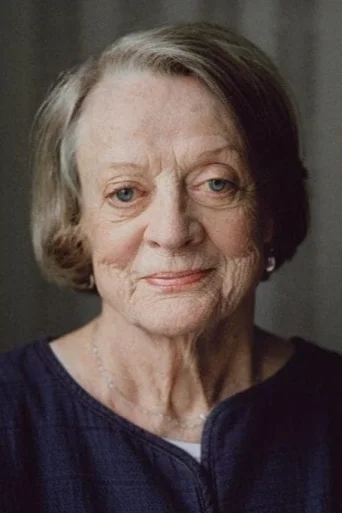
Dame Maggie Smith, born in 1934 in Ilford, Essex, England, is celebrated as one of the most distinguished actresses in film, television, and theatre. Her extensive career spans over seven decades, during which she has captivated audiences with her remarkable performances and profound depth as an actress. Known for her sharp wit and commanding presence, Maggie Smith's contributions to the cinematic landscape have solidified her status as a true icon of the performing arts.
Maggie Smith's early career began in the 1950s, where she showcased her talent in various stage productions before making her film debut in the 1956 movie "Nowhere to Go." However, it was her role in the 1969 film "The Prime of Miss Jean Brodie" that marked a significant breakthrough in her career, earning her an Academy Award for Best Actress. This pivotal performance established her as a leading actress in Hollywood and opened the door to a series of remarkable roles that would define her legacy.
Throughout her illustrious career, Maggie Smith starred in numerous acclaimed films, including the beloved "Harry Potter" series. In "Harry Potter and the Philosopher's Stone" (2001) and "Harry Potter and the Deathly Hallows: Part 2" (2011), she portrayed the formidable Professor Minerva McGonagall, a role that endeared her to a new generation of fans and showcased her ability to blend strength with tenderness. Her artistic evolution continued as she seamlessly transitioned between film and television, also earning acclaim for her role in the hit series "Downton Abbey," where her portrayal of the matriarch Violet Crawley captured both humor and heart.
Maggie Smith's collaborations with notable directors and actors have further enriched her filmography. Her work with filmmakers such as James Ivory in "A Room with a View" (1985) and "The Remains of the Day" (1993) exemplifies her ability to embody complex characters with grace. Over the years, she has received numerous accolades, including multiple BAFTA Awards and a Golden Globe, affirming her impact and recognition in the international film community.
As a testament to her enduring legacy, Maggie Smith's performances continue to resonate with audiences worldwide. Her ability to traverse the complexities of human emotion, combined with her unparalleled talent, has left an indelible mark on the film industry. Dame Maggie Smith's contributions to the arts will be cherished for generations, ensuring that her brilliance remains a beacon of inspiration in Hollywood and beyond.
Maggie Smith's early career began in the 1950s, where she showcased her talent in various stage productions before making her film debut in the 1956 movie "Nowhere to Go." However, it was her role in the 1969 film "The Prime of Miss Jean Brodie" that marked a significant breakthrough in her career, earning her an Academy Award for Best Actress. This pivotal performance established her as a leading actress in Hollywood and opened the door to a series of remarkable roles that would define her legacy.
Throughout her illustrious career, Maggie Smith starred in numerous acclaimed films, including the beloved "Harry Potter" series. In "Harry Potter and the Philosopher's Stone" (2001) and "Harry Potter and the Deathly Hallows: Part 2" (2011), she portrayed the formidable Professor Minerva McGonagall, a role that endeared her to a new generation of fans and showcased her ability to blend strength with tenderness. Her artistic evolution continued as she seamlessly transitioned between film and television, also earning acclaim for her role in the hit series "Downton Abbey," where her portrayal of the matriarch Violet Crawley captured both humor and heart.
Maggie Smith's collaborations with notable directors and actors have further enriched her filmography. Her work with filmmakers such as James Ivory in "A Room with a View" (1985) and "The Remains of the Day" (1993) exemplifies her ability to embody complex characters with grace. Over the years, she has received numerous accolades, including multiple BAFTA Awards and a Golden Globe, affirming her impact and recognition in the international film community.
As a testament to her enduring legacy, Maggie Smith's performances continue to resonate with audiences worldwide. Her ability to traverse the complexities of human emotion, combined with her unparalleled talent, has left an indelible mark on the film industry. Dame Maggie Smith's contributions to the arts will be cherished for generations, ensuring that her brilliance remains a beacon of inspiration in Hollywood and beyond.